



Why CO₂ Monitoring in Corn & Feed Silos is Critical — and How Early Detection Saves Performance
The Hidden Threat Inside Your Silos
Feed degradation can reduce poultry performance — even when temperature appears normal. Corn and compound feeds can deteriorate inside silos due to mold, mycotoxins, and insects, without any visible heating.
Scientific literature clearly shows that such feeds reduce weight gain and worsen feed conversion ratio in poultry. Early detection of these problems is critical to maintaining the health and productivity of your flock.
Mold Growth
Fungal contamination spreads silently, producing dangerous mycotoxins before any visible signs appear.
Mycotoxins
Toxic compounds that directly impair poultry metabolism, weight gain, and feed conversion efficiency.
Insect Infestation
Storage insects consume nutritional components and accelerate mold growth, compounding feed losses.
Proven Impact of Mold & Mycotoxins on Poultry Performance
Research in poultry farming is clear and consistent. Based on scientific studies, the evidence is overwhelming.
Body Weight Reduction
Average reduction in body weight when poultry are fed contaminated grain or compound feed.
Reduced Feed Intake
Poultry voluntarily consume less when feed palatability and quality are compromised by contamination.
Ochratoxin Weight Loss
Specific reduction in weight gain caused by ochratoxin contamination in stored feed.
Aflatoxin Weight Loss
Specific reduction in weight gain caused by aflatoxin contamination — one of the most common mycotoxins.
Even moderate feed contamination can lead to double-digit performance losses. Scientific references: Andretta et al., Poultry Science 2011; Bryden, AFST 2012; Ileleji et al., 2006; Purdue Extension.
Why Temperature Monitoring Alone Is Not Enough
Temperature sensors detect heat, not early biological activity. This means that by the time temperature rises, the problem has already progressed significantly — and performance losses may already be occurring.
Local Hot Spots
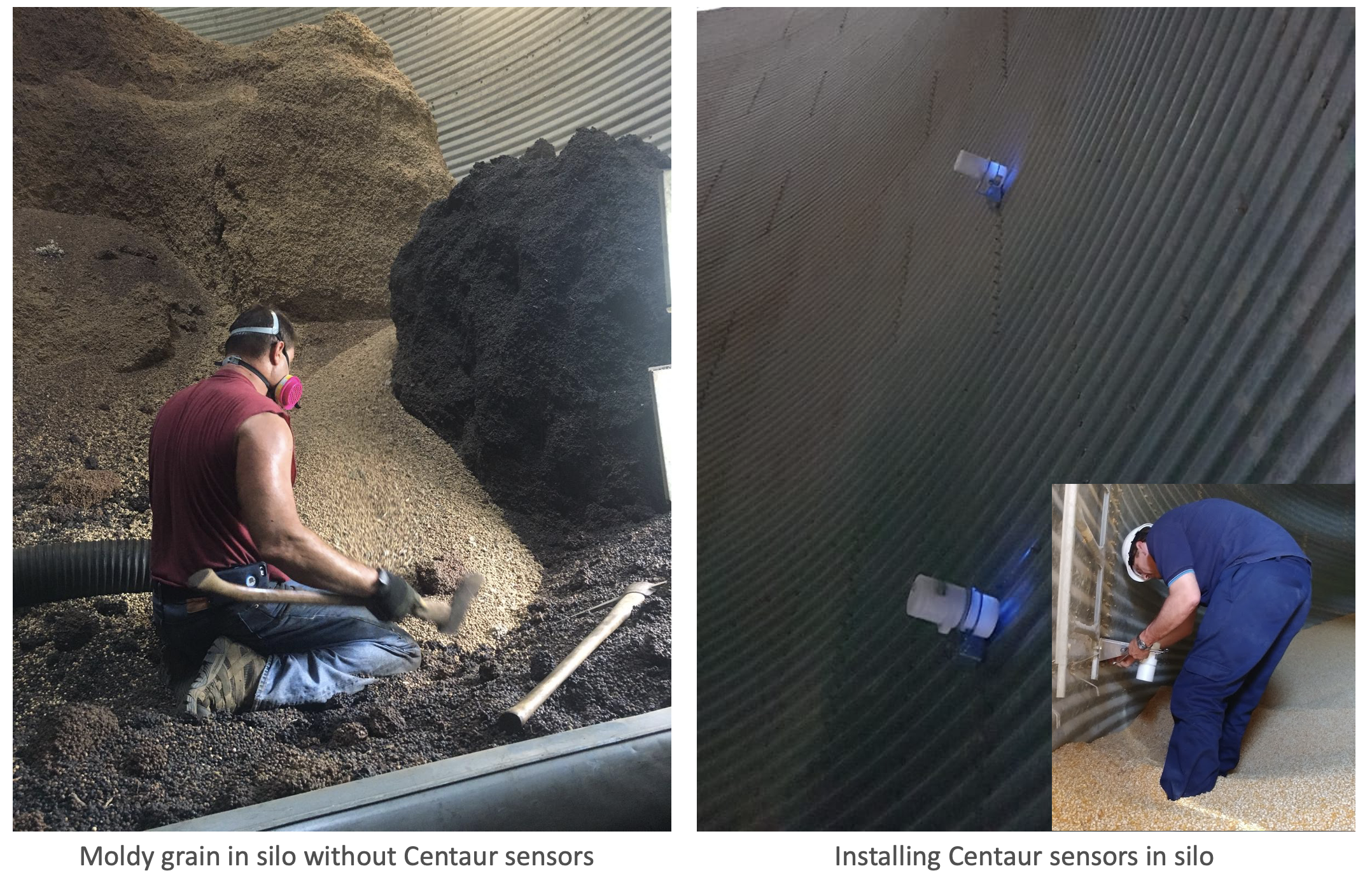
Mold and insect development starts in limited, localized areas of the silo that temperature probes may never reach.
Delayed Detection
Hotspots don’t immediately raise the overall silo temperature — the signal is too slow and too late.
Early Toxin Production
Mycotoxins develop before there is any measurable temperature rise — making temperature a lagging indicator.
Grain storage researchers conclude: temperature alone often detects the problem too late to prevent significant feed quality loss.
CO₂: An Early and Scientifically Validated Indicator of Spoilage
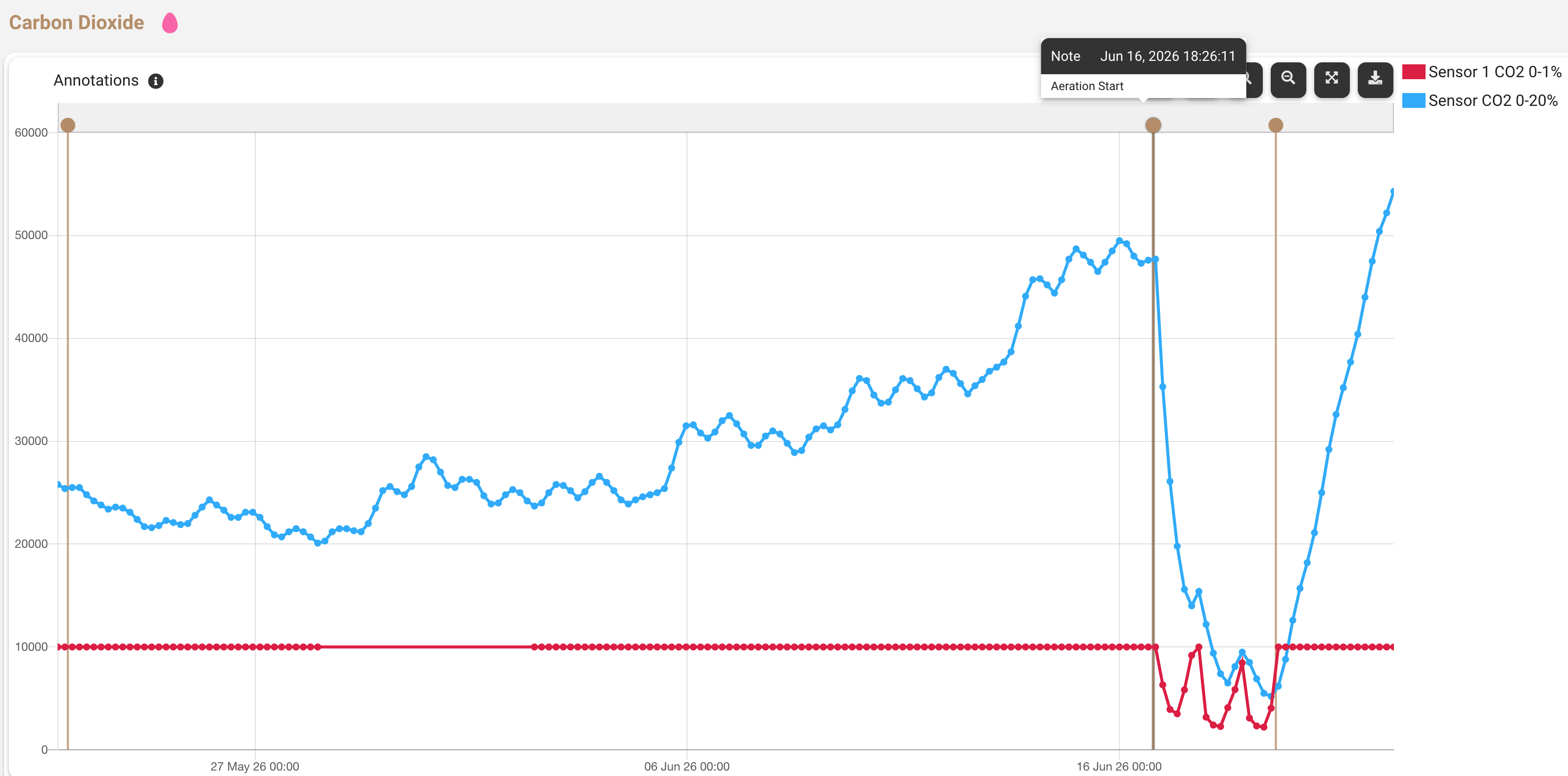
Mold and insects are aerobic organisms. As they grow or infect corn or feed, they breathe and produce CO₂. This makes carbon dioxide an extremely reliable and early indicator of spoilage — rising well before temperature does.
What Elevated CO₂ in Your Silo Is Telling You
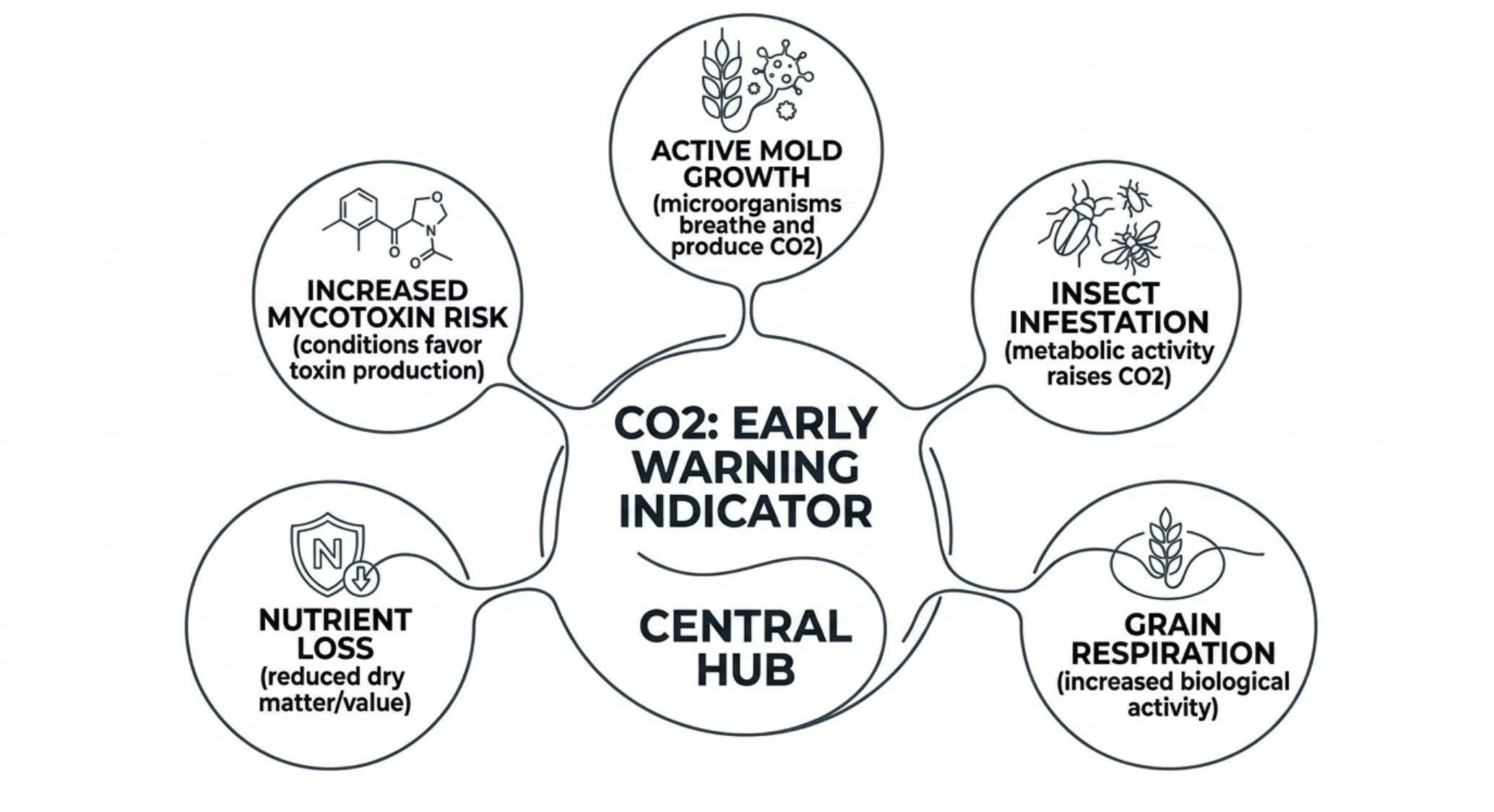
Critical advantage: CO₂ reveals the problem before degradation becomes irreversible. Studies show that CO₂ rises earlier than temperature during spoilage, providing valuable time for intervention.
Insects in Corn & Feed Reduce Performance
Storage insects don’t just cause weight losses in the silo. Their consequences are much broader and directly affect feed quality and poultry performance. Insect respiration also contributes to elevated CO₂ — making it a reliable detection signal.
Direct Loss of Nutritional Value
Insects consume the most nutritious components of the feed — proteins, fats, and vitamins — reducing its energy density.
Increased Moisture and Local Heating
Metabolic activity of insects creates moisture and heat, worsening storage conditions and accelerating deterioration.
Acceleration of Mold Growth
Conditions created by insects — warmth and moisture — directly favor fungal development and mycotoxin production.
Reduction of Palatability
Infested feed becomes less attractive to poultry, reducing voluntary intake and compounding performance losses.
Purdue Extension: Insects reduce nutritional value and promote mold growth. Their respiration contributes directly to elevated CO₂ levels inside the silo.
How CO₂ Monitoring Protects Performance
CO₂ measurement in corn and compound feed silos is a powerful prevention tool offering multiple benefits in feed management — transforming invisible spoilage into early, measurable action.
Early Detection
Identify spoilage before temperature rises — gaining critical intervention time that temperature sensors cannot provide.
Quality Protection
Identify dangerous batches before they reach the feeder — preventing contaminated feed from ever reaching your flock.
Improved Performance
Protection of weight gain, flock uniformity, and feed conversion ratio — maximizing productivity and profitability.
By acting on CO₂ data early, poultry producers can intervene before feed quality deteriorates irreversibly — protecting weight gain, feed conversion ratio, and flock uniformity throughout the production cycle.
The Centaur Solution
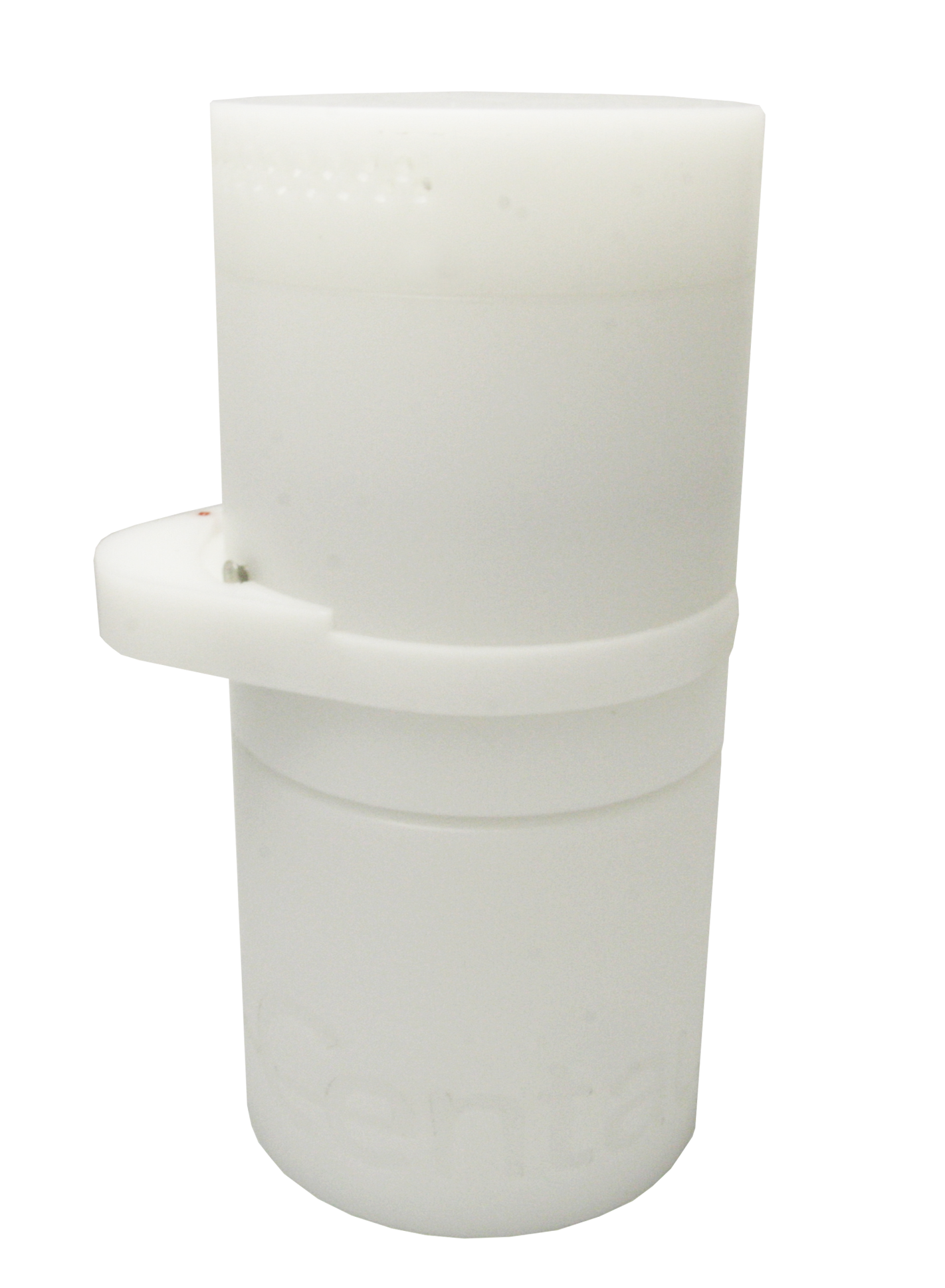
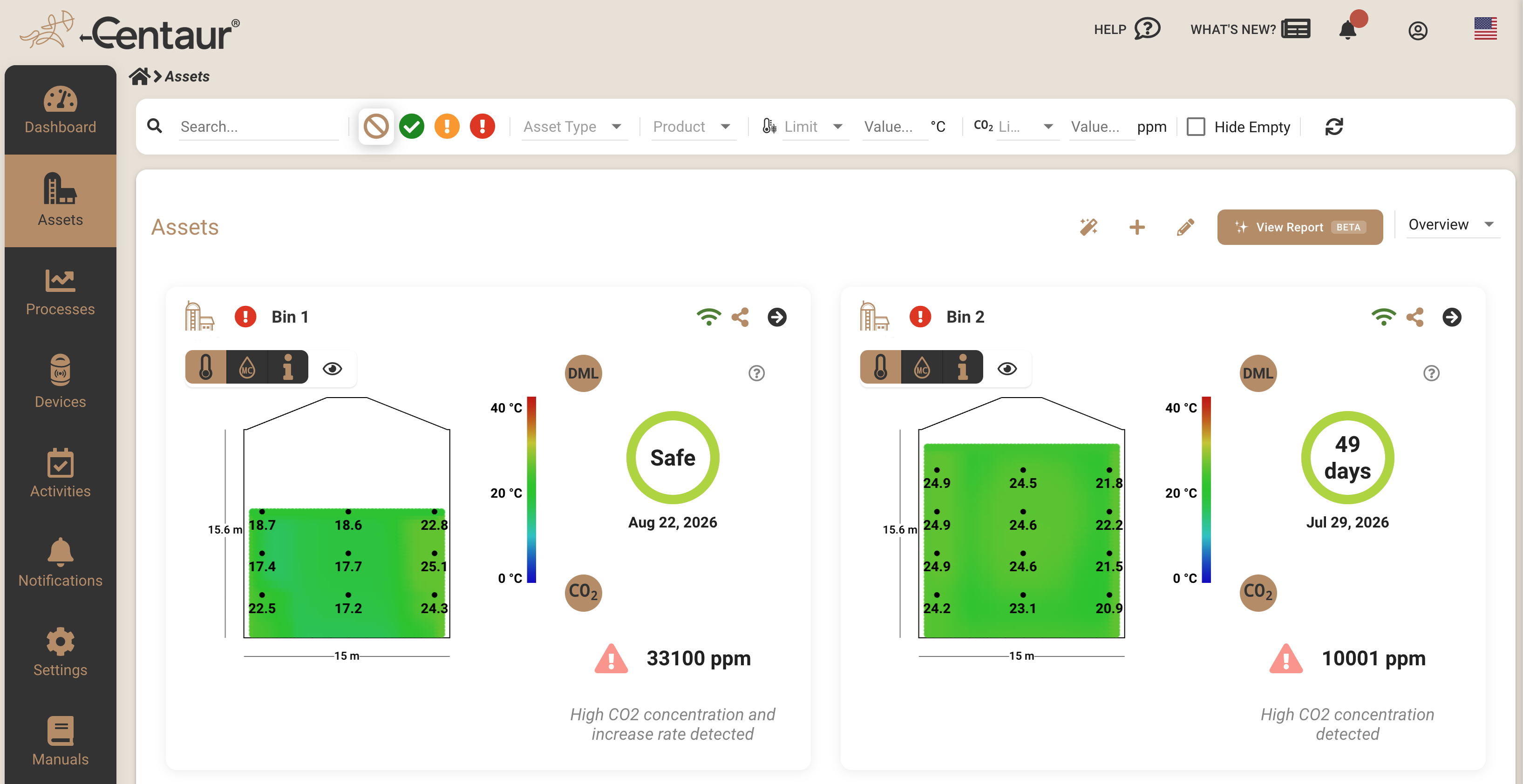
Centaur Internet-of-Crops® offers a comprehensive, predictive monitoring solution for grain and feed storage. Using wireless sensors and AI-based analytics, we provide accurate real-time data on your feed condition — enabling proactive decisions that protect product quality.
Hardware & Sensing
Wireless CO₂ & Humidity Sensors
Accurate CO₂ and humidity measurement throughout the silo, without cables or complex installation.
Real-Time Temperature Measurement
Continuous temperature monitoring through a digital model, across the entire silo volume.
Automatic Volume Recording
Radar technology for accurate, continuous feed volume monitoring without manual checks.
Easy Installation
Simple and fast installation without specialized staff or wiring — operational within hours.
Intelligence & Analytics
Predictive Technology
Real-time modeling of the entire grain mass to predict problems before they develop into losses.
Timely Warnings
Receive alerts before quality problems develop, enabling early intervention and preventing losses.
Energy Efficiency
Smart ventilation recommendations to optimize energy use while maintaining optimal storage conditions.
Unique Advantage: The only enterprise-level solution that measures CO₂ and humidity wirelessly inside the silo — protecting feed quality before problems appear.
By implementing the Centaur solution, you ensure optimal feed quality, prevent the development of mycotoxins and insects, and detect any deterioration at an early stage. This leads to protection of weight gain, improved uniformity, and more efficient feed conversion for your poultry — maximizing your productivity and profitability.
Centaur FL — Real-Time Feed Inventory & Feeding Management
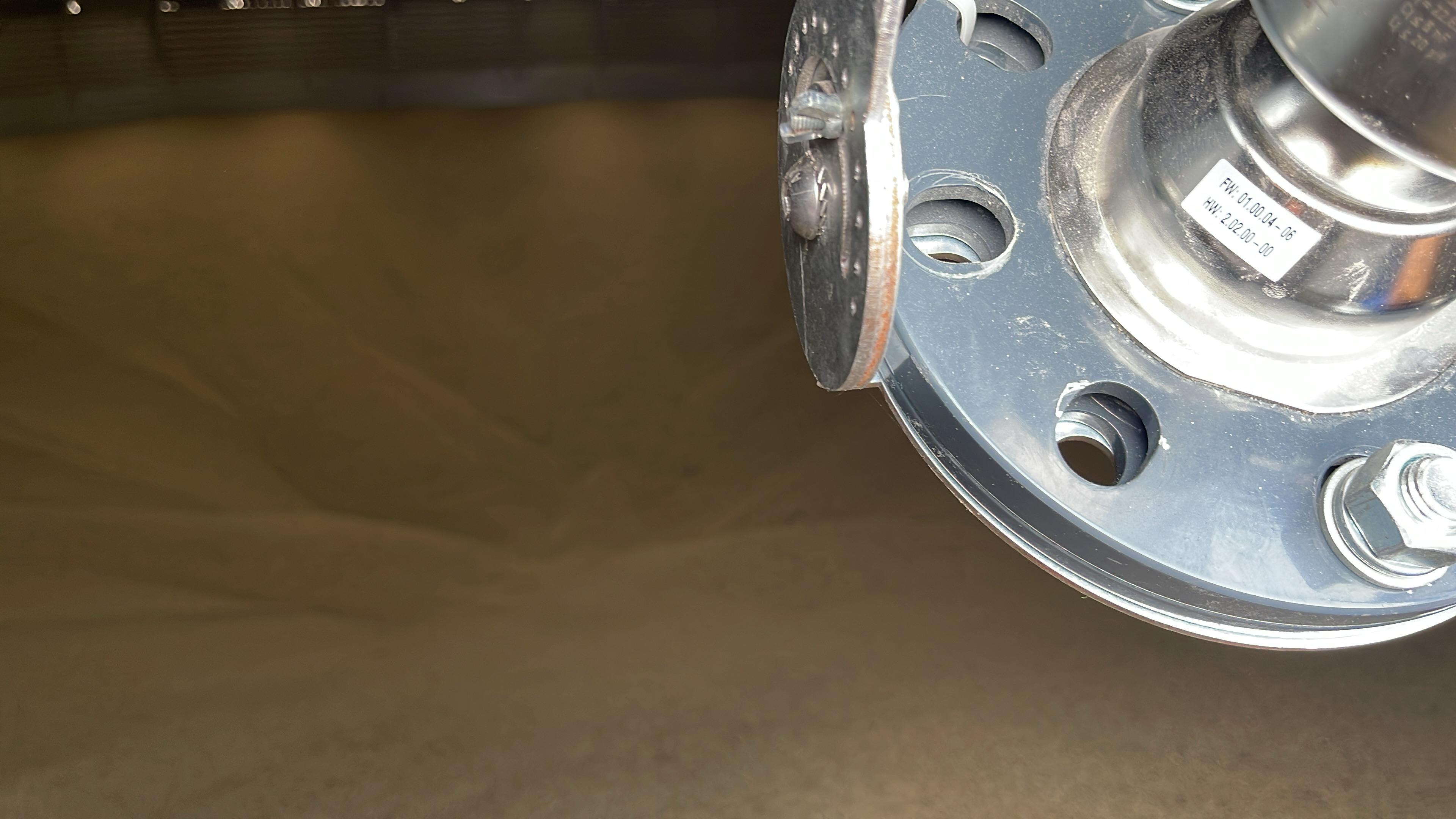
The Centaur Internet-of-Crops® algorithm is designed for monitoring both grain and feed storage. The Centaur FL sensor focuses on inventory monitoring — measuring in real-time how much feed is in the silo, so farms never face shortages.
In poultry and livestock farming, feeding consistency is critical for weight gain. Even a single feeding gap can set back flock performance significantly.
Timely Feeding & Smart Ordering
The FL sensor monitors feed consumption and predicts when inventory will run out — giving enough time to place an order before a shortage occurs. Avoid feeding gaps that affect flock performance.
Always Know Your Inventory
No need to climb the silo — data is on your phone, updated in real time.
Timely Replenishment Alerts
Order on time, without surprises or costly rush orders that disrupt operations.
Consumption Forecasting
Understand how quickly feed is consumed per season or growth phase for smarter planning.
Final Scientific Conclusion
The evidence is clear: mold, mycotoxins, and insects can reduce poultry weight gain by 10–20%. CO₂ monitoring provides early warning of these risks — before temperature reacts and before performance losses appear.
10–20%
Weight Gain at Risk
Potential reduction in poultry weight gain due to mold, mycotoxins, and insects in stored feed.
98
Scientific Studies
Meta-analysis studies confirming the impact of mycotoxins on poultry performance.
CO₂ monitoring transforms “invisible” feed spoilage into early and measurable action — protecting poultry performance. Centaur Internet-of-Crops® technology is the only solution that secures stored goods in grain silos and feed warehouses.
By implementing the Centaur solution, you ensure optimal feed quality, prevent the development of mycotoxins and insects, and detect any deterioration at an early stage. This leads to protection of weight gain, improvement of uniformity, and more efficient feed conversion for your poultry — maximizing your productivity and profitability.